
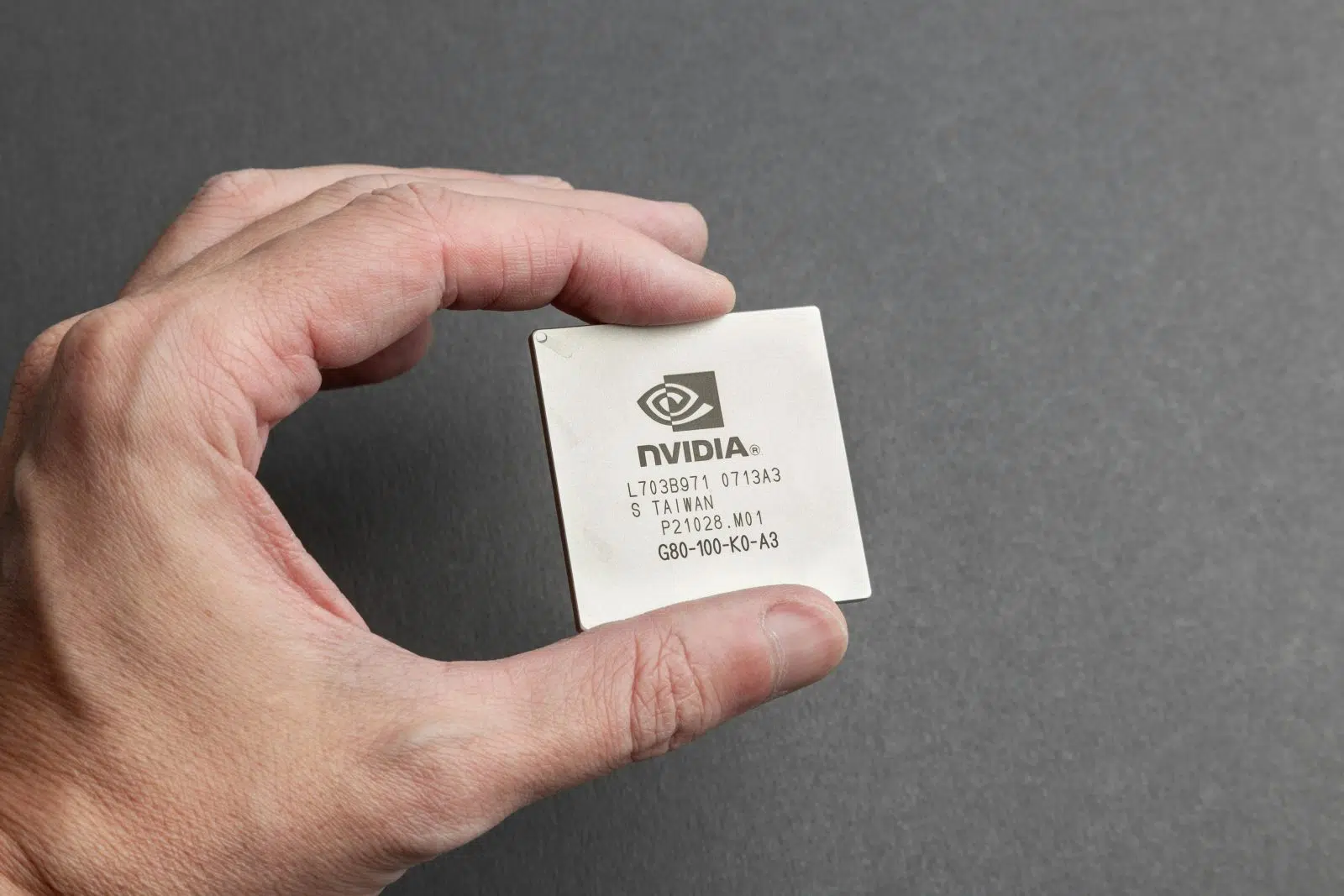
Why Nvidia Stock Isn’t Soaring With AI Spending
Big Tech is pouring record-breaking sums into artificial intelligence infrastructure — yet Nvidia stock has gone surprisingly quiet. Even as companies like Meta, Microsoft, Amazon, and Alphabet ramp up capital expenditures for AI data centers, Nvidia shares have been trading sideways for months.
For investors, this disconnect raises a crucial question: If AI spending is exploding, why isn’t Nvidia stock responding with another breakout rally?
The answer lies not in collapsing demand — but in expectations, valuation psychology, and growing debate over how long the AI infrastructure supercycle can truly last.
AI Capex Is Exploding — But Nvidia Shares Aren’t
Major technology companies are expected to collectively spend more than $600 billion on AI infrastructure in 2026. That includes massive investments in data centers, networking, custom silicon, and — most importantly — high-performance GPUs.
Nvidia remains the dominant supplier of AI accelerators powering hyperscale cloud providers. Yet despite this favorable backdrop, Nvidia stock has gained less than 1% since the start of the fourth quarter and has largely moved in a narrow range.
This marks a sharp contrast to prior years. After two consecutive triple-digit annual gains and nearly 40% growth in 2025 alone, Nvidia’s explosive momentum has cooled.
The market’s hesitation isn’t about demand — it’s about sustainability.
Valuation Compression: The Market Is Looking Ahead
Nvidia’s growth remains impressive. Revenue is projected to rise roughly 58% this year and another 28% in 2027. However, markets price the future — not the present.
Today, Nvidia trades around 24x forward earnings, roughly in line with the Nasdaq 100. While that’s lower than its five-year average valuation of 38x, investors aren’t treating it as a bargain.
Why?
Because the semiconductor industry is cyclical by nature. Even dominant players eventually face digestion periods after massive investment waves. The concern is that AI infrastructure spending may reach a saturation point sooner than expected.
When capex growth slows, so does multiple expansion.
Is AI Spending Getting Ahead of Revenue?
A growing debate on Wall Street centers on a simple but powerful question:
Will AI-generated revenue keep pace with AI-related capital spending?
Some portfolio managers worry that hyperscalers are building capacity faster than end-user monetization can justify. If enterprises and consumers don’t generate sufficient AI-driven revenue streams quickly enough, companies may pause spending to “digest” existing infrastructure.
That pause would directly affect Nvidia’s growth trajectory.
In other words, the issue isn’t whether AI is transformative — it’s whether the timeline for returns aligns with the scale of current investment.
Psychology After a Historic Run
After a historic stock run like Nvidia’s, consolidation isn’t unusual.
Markets often go through digestion phases following extraordinary gains. Investor psychology shifts from euphoria to caution. Even strong earnings may fail to excite traders if expectations are already sky-high.
This shift reflects a broader truth about markets:
The bigger the prior rally, the higher the bar becomes.
Nvidia may simply be experiencing a pause as investors reassess risk-reward dynamics rather than signaling structural weakness.
The Next Catalyst: Earnings Guidance
All eyes now turn to Nvidia’s upcoming earnings report.
Investors will closely analyze:
- AI chip demand trends
- Gross margin outlook
- Supply constraints
- Data center backlog visibility
- Forward revenue guidance
Wall Street analysts have not significantly raised 2026 projections despite hyperscaler spending announcements — suggesting many are waiting for management confirmation before revising models.
Clear, confident guidance could reignite bullish momentum. Cautious commentary, however, may reinforce range-bound trading.
Capex Deceleration: A Double-Edged Sword
Interestingly, slower capital expenditure growth could benefit hyperscalers’ stock performance — while potentially pressuring Nvidia.
If companies like Meta and Microsoft demonstrate improving AI return on investment (ROI) while moderating spending growth, their stocks may outperform.
But for Nvidia, whose valuation depends heavily on infrastructure acceleration, even a deceleration — not a decline — could weigh on sentiment.
The AI ecosystem is interdependent, and leadership rotation is possible.
Competition Is Rising — But Demand Remains Strong
Another factor influencing Nvidia stock is rising competition.
Major cloud providers are increasingly developing custom AI chips. Google, Amazon, and Microsoft are expanding in-house silicon efforts to reduce reliance on third-party vendors.
However, these chips complement rather than fully replace Nvidia GPUs in most AI workloads — at least for now. Nvidia’s CUDA software ecosystem, networking stack, and system-level integration still provide a significant competitive moat.
The real question is how much incremental share Nvidia can capture from here.
Is Nvidia Stock Still a Long-Term AI Leader?
Despite short-term stagnation, Nvidia remains central to the global AI infrastructure buildout.
Data center spending continues.
AI model sizes are expanding.
Enterprise adoption is accelerating.
Physical AI, robotics, and edge computing markets are emerging.
Even if growth moderates from peak levels, the long-term secular demand story remains intact.
For long-term investors, the consolidation phase may represent normalization rather than deterioration.
Nvidia Stock Faces a Higher Bar — Not a Broken Story
The cooling of Nvidia stock amid ballooning AI spending isn’t a contradiction — it’s a reflection of elevated expectations.
Markets have already priced in massive AI expansion. Now, investors want proof that revenue growth can sustainably justify the capital intensity.
This phase may feel uncomfortable, especially after years of explosive gains. But historically, leadership stocks often pause before their next move.
Whether Nvidia breaks higher again will depend less on spending headlines — and more on execution, guidance, and the pace at which AI translates into measurable economic value.
The AI boom isn’t over. But for Nvidia stock, the easy money phase may have passed — and the next chapter will require stronger validation.