
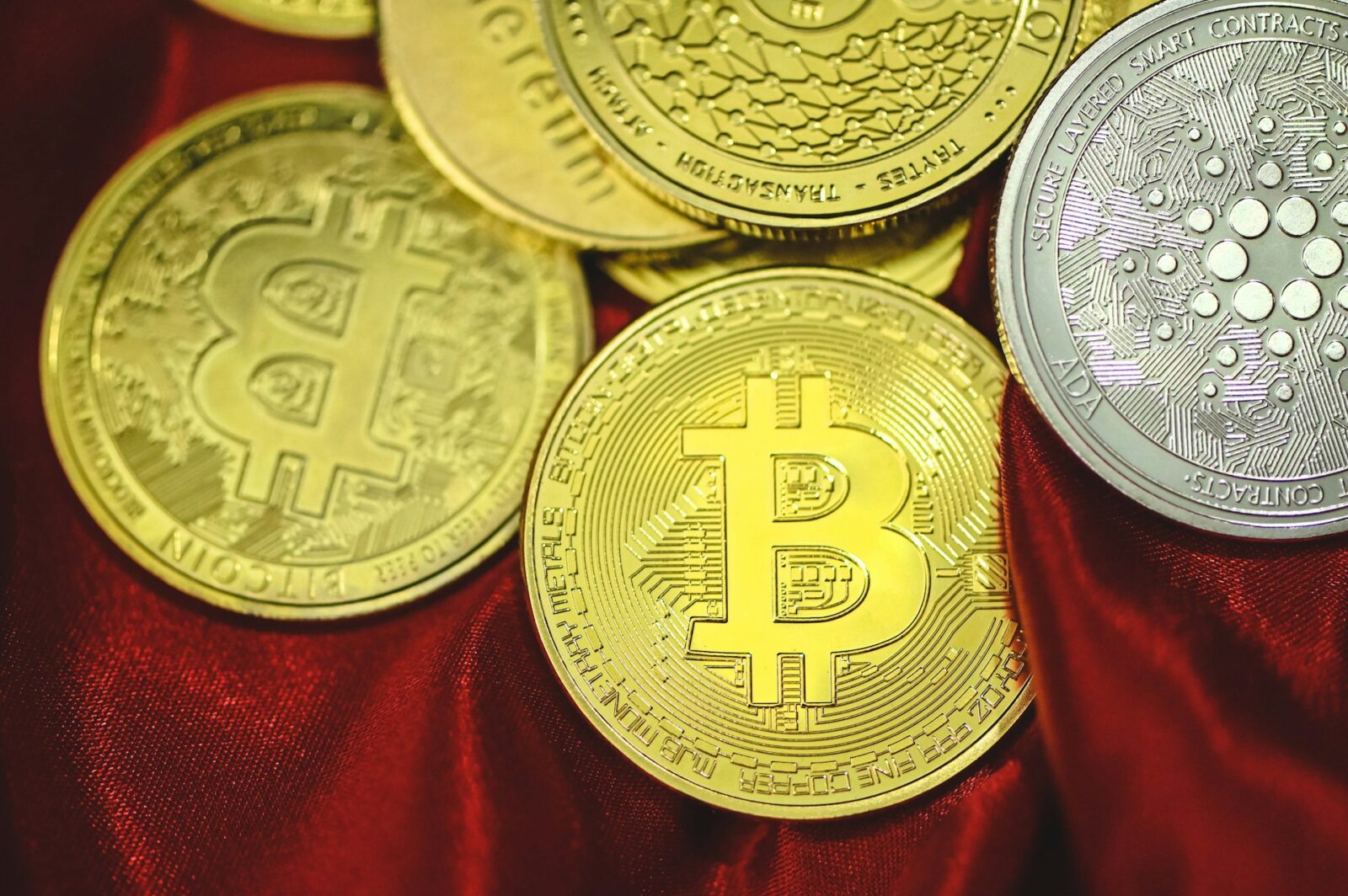
Bitcoin’s latest pullback has reignited a familiar debate across global markets: is this sell-off merely a short-term liquidity shakeout, or does it signal a deeper challenge to Bitcoin’s role as a long-term store of value? While price weakness has rattled sentiment, many analysts argue that the correction may ultimately strengthen Bitcoin’s positioning—especially as capital reassesses its role relative to gold, silver, and other traditional safe havens.
Short-Term Pain or Structural Breakdown?
The recent Bitcoin sell-off has unfolded alongside sharp reversals in precious metals. After gold slipped and silver suffered one of its steepest single-day drops in decades, Bitcoin showed relative resilience. Rather than collapsing in tandem, it stabilized, prompting traders to question whether metals had become overcrowded trades while crypto had already absorbed much of the downside.
Bitcoin recently rebounded to around $78,800, posting a modest daily gain even as it remains down roughly 13% over the past month. That divergence has fueled the view that Bitcoin’s weakness reflects cyclical positioning and liquidity stress, not a breakdown of its long-term thesis.
Capital Rotation and the Metals Effect
According to market strategists, part of Bitcoin’s underperformance can be traced to capital flows that favored silver over crypto during the recent rally in hard assets. As silver surged aggressively, speculative capital that might have rotated into Bitcoin instead chased momentum in metals.
Analysts now warn that as silver cools and volatility normalizes, some of that capital could gradually rotate back into Bitcoin—particularly if investors reassess relative value across alternative assets.
Policy and Flow Catalysts in Focus
Beyond price action, policy developments and institutional flows are shaping near-term expectations. Market participants are closely watching progress on U.S. crypto market structure legislation, which could provide clearer regulatory guardrails and improve investor confidence.
On the flow side, several high-profile moves have drawn attention. Binance has announced plans to convert roughly $1 billion from its SAFU fund into Bitcoin, while Tether continues to increase its exposure to gold, indirectly reinforcing the broader digital-asset ecosystem. These actions suggest that major industry players remain committed to long-term crypto infrastructure, even amid near-term volatility.
Liquidity-Driven Selling, Not Capitulation
Several digital asset firms maintain that Bitcoin’s recent weakness is liquidity-driven rather than structurally bearish. They argue that Bitcoin is behaving like a risk-sensitive asset during periods of stress, reacting to tightening liquidity conditions instead of experiencing forced, panic-driven selling.
This interpretation is supported by the absence of large-scale capitulation from long-term holders. While short-term traders have reduced exposure, strategic holders appear to be maintaining conviction, reinforcing the idea that Bitcoin’s core narrative remains intact.
A More Cautious Read From On-Chain Signals
Not all analysts are fully convinced the worst is over. Some point to muted accumulation activity among large holders, suggesting that confidence has yet to return in force. On-chain data shows that profit-taking from long-term holders has slowed, but aggressive buying has not yet materialized.
According to Glassnode, more than 22% of Bitcoin’s circulating supply is currently held at a loss. This condition can amplify volatility, as derivatives traders hedge exposure and reinforce downside momentum during periods of stress.
Bitcoin vs. Gold: A Shifting Relationship
An emerging theme in this cycle is the evolving relationship between Bitcoin and gold. While Bitcoin was once viewed as a direct beneficiary of gold’s strength, recent market behavior suggests a more complex dynamic.
Gold has improved its liquidity profile through tokenization and integration with decentralized finance, while Bitcoin has increasingly absorbed volatility tied to speculative positioning. In effect, gold appears to be adopting some of Bitcoin’s advantages, while Bitcoin absorbs some of gold’s downside sensitivity during macro shocks.
Does Bitcoin Still Qualify as a Store of Value?
The question of whether Bitcoin remains a reliable store of value continues to divide opinion. Critics argue that easy access through ETFs and short-term trading narratives have diluted Bitcoin’s defensive image, making it look more like a speculative asset than a refuge.
Others counter that the store-of-value thesis remains intact, but requires time and broader adoption to fully reassert itself—particularly in an environment dominated by a strong U.S. dollar and shifting global liquidity conditions.
Some analysts believe Bitcoin may need renewed sovereign or institutional endorsement—similar to the precedent set by El Salvador—to reignite its narrative as a strategic reserve asset rather than a trading vehicle.
A Volatile Reset, Not the End of the Story
While Bitcoin’s sell-off has tested investor patience, it may ultimately serve as a constructive reset rather than a fatal blow. Excess leverage has been flushed out, speculative excess has cooled, and the asset is being forced to reprice amid changing macro conditions.
The silver lining lies in the fact that Bitcoin’s long-term drivers—scarcity, decentralization, and global accessibility—remain unchanged. If liquidity conditions stabilize and capital rotates back from crowded trades, Bitcoin could emerge from this correction on firmer footing, better positioned for its next phase of adoption.