
CES 2026 Signals the Next Tech Supercycle
CES 2026 has made one thing unmistakably clear: the next decade of technology is being built right now. From artificial intelligence embedded into everyday devices to powerful new chips and increasingly capable robots, the world’s largest consumer tech show felt less like a gadget expo and more like a preview of a fully AI-driven economy.
Walking the packed halls of the Las Vegas Convention Center, a few themes dominated nearly every keynote, booth, and product demo. AI, semiconductors, and robotics weren’t just buzzwords — they were the backbone of nearly every major announcement. And if CES 2026 is any indication, this transformation is only just getting started.
AI Everywhere: From Living Rooms to Wearables
Artificial intelligence was not just present at CES 2026 — it was unavoidable. Nearly every major brand showcased how AI is becoming deeply embedded into consumer experiences, enterprise tools, and connected devices.
Google highlighted how Gemini 3 is being integrated directly into Google TV, allowing users to search for content, organize libraries, and even customize on-screen visuals using natural language. The push underscores Google’s strategy of moving AI beyond the cloud and directly into consumer-facing platforms.
Samsung grabbed attention with the U.S. debut of its Galaxy Z Trifold, a futuristic foldable device featuring on-device AI tools designed to enhance productivity, photography, and multitasking. Across the show floor, AI-powered glasses, rings, health trackers, and smart home devices reinforced a growing trend: AI is no longer optional — it’s expected.
A Chip Showcase That Redefined Performance
CES 2026 also served as a battleground for the world’s largest chipmakers, all racing to define the future of AI compute.
Nvidia delivered the show’s most talked-about keynote. CEO Jensen Huang unveiled the Vera Rubin platform, introducing six new chips spanning CPUs, GPUs, networking, and storage. According to Nvidia, the platform offers a 10x improvement in throughput and a 10x reduction in token costs compared to its previous Grace Blackwell architecture — a massive leap for AI training and inference.
Huang also emphasized Nvidia’s growing AI software ecosystem, including Alpamayo, a new self-driving car model designed to help vehicles interpret unpredictable real-world scenarios. This signals Nvidia’s ambition to dominate not just data centers, but physical AI applications as well.
Not to be overshadowed, Advanced Micro Devices CEO Lisa Su took direct aim at Nvidia by unveiling the Helios rack-scale AI system, powered by AMD’s Instinct GPUs. Matching Nvidia’s 72-chip rack configuration, Su confidently described Helios as the “world’s best AI rack,” setting the stage for intensified competition in hyperscale data centers.
Meanwhile, Intel showcased its Core Ultra Series 3 AI PC processors, part of its broader turnaround strategy, while Qualcomm introduced the Snapdragon X Plus 2 chip, fueling a three-way race to dominate AI-powered personal computing.
Robots Step Out of the Lab and Onto the Show Floor
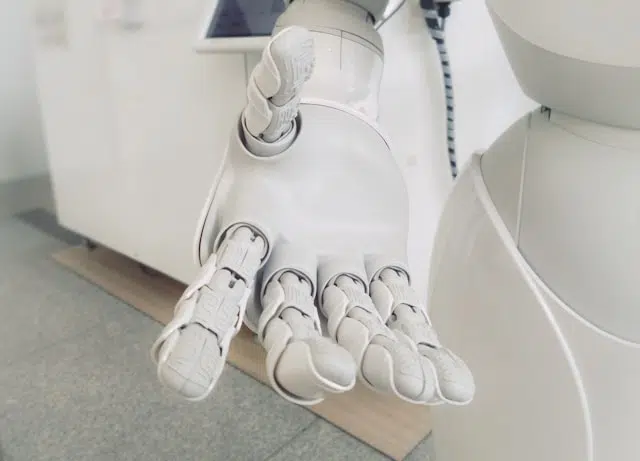
If CES 2026 proved anything visually, it’s that robots are no longer science fiction. They walked, rolled, assisted, and even interacted with attendees.
Nvidia featured humanoid robots, surgical simulation systems, and autonomous service bots — all powered by its AI stack. AMD unveiled its GENE.01 humanoid robot, developed with Generative Bionics and driven by AMD CPUs and GPUs for industrial applications.
Intel partnered with Oversonic Robotics to showcase RoBee, a humanoid robot using Intel’s processors, while Qualcomm introduced its Dragonwing IQ10 robotics chips, announcing partnerships with companies like Figure and VinMotion to accelerate humanoid robot development.
Perhaps most notably, Hyundai and Boston Dynamics outlined plans to bring humanoid robots into mass production. Hyundai confirmed it will deploy Boston Dynamics’ Atlas robot inside its factories starting in 2028 — a major step toward industrial-scale robotics adoption.
Why CES 2026 Feels Like a Turning Point
What made CES 2026 different wasn’t just the volume of announcements — it was the cohesion. AI software, advanced chips, and robotics are no longer developing in isolation. They are converging into a single ecosystem designed to power data centers, factories, vehicles, and homes simultaneously.
This convergence suggests the tech industry is moving beyond experimentation and into execution at scale. The investments, partnerships, and product roadmaps unveiled in Las Vegas point toward multi-year growth cycles across AI infrastructure, consumer devices, and automation.
The Future Is Arriving Faster Than Expected
CES 2026 made it clear that the AI revolution is accelerating, not peaking. From smarter devices and faster chips to robots entering real-world environments, the technologies unveiled this year are laying the foundation for the next global growth wave.
While many of these innovations will take time to mature, the direction is unmistakable. AI, chips, and robotics are no longer niche trends — they are becoming the core pillars of the global economy. If CES 2026 is any guide, what we’re seeing now is only the opening chapter of a much larger transformation.