
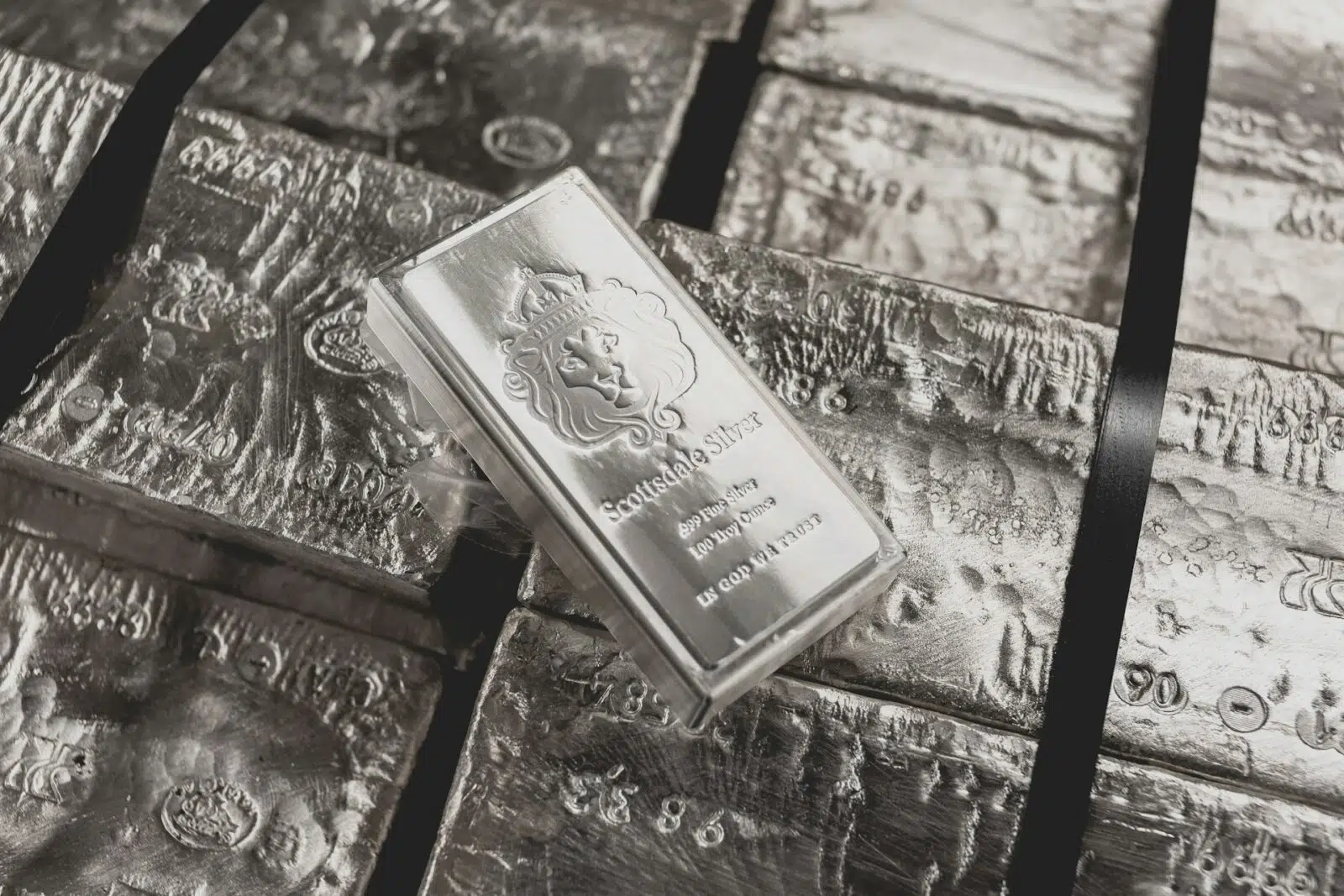
In a year defined by wild swings across commodities, silver has become one of the most closely watched assets in the global market. The metal’s surge to fresh record highs has been fueled by a unique combination of macroeconomic uncertainty, tightening physical supply, and a renewed wave of speculative interest. But as investors wait for long-delayed US economic data to finally hit the wires, silver’s blistering rally has temporarily cooled—reminding traders that even in a bull market, volatility remains king.
On Wednesday, silver briefly spiked to an unprecedented $58.9471 an ounce, only to retreat by as much as 1.6% shortly afterward. The move underscores a simple reality: when a commodity trades at record territory, every data release, policy shift, or macro headline becomes a potential catalyst for sharp swings. With pending reports on US jobs and industrial production—data delayed by the government shutdown—markets are now in wait-and-see mode.
Yet even with this pullback, silver remains within reach of its highs, supported by tightening inventories, expectations of Federal Reserve rate cuts, and increasingly aggressive demand from both institutions and retail traders.
Silver’s Whipsaw Move Shows Just How Sensitive the Market Has Become
Wednesday’s price action captures the delicate balance driving the metal: surging speculative interest on one side and macro uncertainty on the other. Silver’s earlier advance to nearly $59 an ounce was fueled by fresh optimism around monetary easing, as traders continued to price in a rate cut at the Fed’s next meeting.
Although the Fed’s leadership is about to change—President Donald Trump is expected to nominate a dovish new chair to replace Jerome Powell—markets are betting that monetary policy will remain geared toward easing. Precious metals tend to benefit when rates fall because they do not yield interest; lower borrowing costs reduce the opportunity cost of holding physical metals like gold and silver.
Gold, by contrast, traded relatively flat on the day. While its long-term trajectory remains bullish, silver has been the standout performer in 2025 thanks to an explosive combination of financial speculation and genuine supply constraints.
Tight Supply Is Fueling Silver’s Price Momentum
One of the most important forces behind silver’s rally is the increasingly tight physical supply across global trading centers.
Last month, a record volume of silver was shipped into London, the world’s largest over-the-counter market for the metal. This influx happened because demand was so strong that supply in other hubs was becoming strained. But the ripple effects only intensified pressure elsewhere—particularly in Asia.
At the Shanghai Futures Exchange, inventories have shrunk to the lowest levels in nearly 10 years, signaling that industrial users and investors alike are snapping up physical metal faster than replenishment can keep up.
This environment of scarcity has attracted fast-money traders looking for markets where shallow dips are quickly bought.
As Pepperstone strategist Ahmad Assiri put it:
“Fast-money traders love markets where pullbacks stay shallow because the physical side keeps tightening every dip.”
Silver’s supply story is unique among major commodities. While gold production is relatively stable and predictable, silver faces:
- Lower mine output in several major producing countries
- Increasing industrial demand from solar panel manufacturing
- Chronic underinvestment in new mining projects
- Rising usage in electronics and energy infrastructure
This combination of factors has created a structural tightness that magnifies any bullish macro catalyst.
ETF Demand Surges Back to Multi-Year Highs
Another indicator of renewed investor interest is the sharp increase in silver-backed exchange-traded fund (ETF) holdings. On Tuesday alone, ETF inventories rose by approximately 200 tons, according to Bloomberg’s calculations. That single-day increase pushed total holdings to their highest point since 2022.
ETF flows are a crucial gauge of sentiment because they reflect broad retail and institutional appetite. Strong inflows typically serve as confirmation that investors expect higher prices ahead, particularly over the medium term.
Compared with gold ETFs—which have seen mixed flows this year—silver funds are experiencing a genuine resurgence. Some analysts attribute the divergence to silver’s dual role: part monetary metal, part industrial metal. In an environment characterized by technological expansion, rate-cut bets, and raw-material tightness, silver stands to benefit from multiple demand channels simultaneously.
Rate Cuts on the Horizon Add Fuel to the Fire
Even though silver cooled off slightly on Wednesday, the macro backdrop remains supportive. Traders are increasingly confident that the Federal Reserve will cut rates in December as the economy shows signs of slowing.
A new Fed chair aligned with Trump’s preference for monetary easing further amplifies the case for lower rates throughout 2026. For metals that don’t pay interest, dovish monetary policy is the lifeblood of sustained rallies.
In addition to rate-cut expectations, uncertainty caused by the delayed release of US economic data has led some investors to scale back risk temporarily. However, once jobs and industrial production reports are released, traders may re-engage if the results support the case for easing.
Silver’s Technical Picture: A Market That Wants to Go Higher
Even with today’s mild retracement, silver remains in an emphatic uptrend.
- Prices are holding above key psychological levels
- Dips continue to attract both speculative traders and industrial buyers
- ETF inflows suggest strong medium-term conviction
- Supply constraints persist across major trading hubs
Silver’s rally has been so intense that many analysts believe the metal may be entering a multi-year revaluation phase—similar to gold’s historic breakout during the 1970s, which was driven by inflation, geopolitical tension, and monetary restructuring.
The backdrop is not identical, but the parallels are hard to ignore.
Gold, Platinum, and Palladium Take a Back Seat
While silver remains the main attraction, other precious metals showed subdued or negative movement:
- Gold held steady at $4,208.23 an ounce after two days of declines
- Platinum and palladium slipped on the day
- The Bloomberg Dollar Spot Index stayed flat, offering little directional push
This divergence underscores silver’s unique market dynamics. Gold often behaves like a macro barometer, but silver is currently behaving like an asset caught between a structural supply squeeze and aggressive speculative demand.
Conclusion: Silver’s Volatility Is a Feature, Not a Bug—and Its Long-Term Outlook Remains Powerful
Though silver’s brief retreat from record highs may appear like a warning sign, it’s more accurate to view it as a natural pause in a fundamentally strong uptrend. The combination of tightening inventories, massive ETF inflows, and expectations of Federal Reserve rate cuts continues to provide a powerful tailwind for the metal.
As new data releases clarify the trajectory of the US economy, traders will gain fresh insight into whether the next leg higher is imminent. And while short-term swings are inevitable, the broader picture suggests silver’s historic rally still has room to run—especially in a world where supply is scarce, monetary easing is favored, and industrial demand shows no signs of slowing.
In this environment, silver is no longer just a precious metal. It has become a barometer for global uncertainty, a proxy for technological growth, and one of the most compelling commodities to watch as markets approach 2026.