
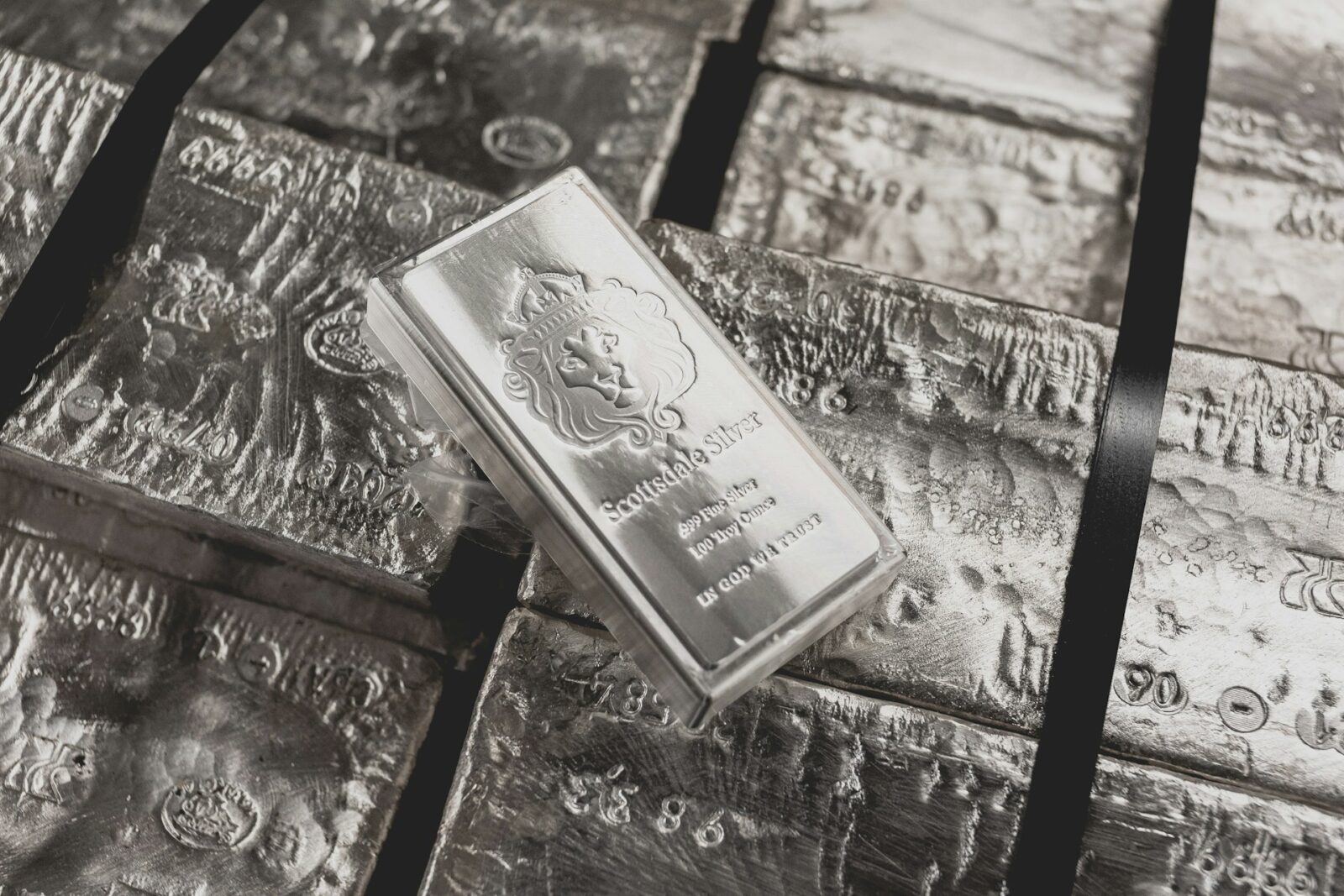
Precious metals have always played a stabilizing role in times of economic uncertainty, but the latest surge in silver is capturing far more than the usual safe-haven interest. As traders around the world position ahead of a potential U.S. rate cut, supply shortages in major trading hubs have propelled silver to fresh highs—making it one of the standout assets of the year. While gold continues to hold steady, silver’s parabolic rise is drawing renewed attention to the metal’s critical role across manufacturing, energy technologies, and investment markets. With supply imbalances intensifying and speculative flows growing, silver is now entering a phase where traders must weigh both extraordinary opportunity and heightened risk.
Below is a deep look into what’s powering silver’s six-day winning streak, why supply conditions have become historically tight, and how macro factors are amplifying the metal’s momentum as the year draws to a close.
Silver Jumps Over 2% to New All-Time High as Traders Bet on Tight Supply
Silver (SI=F) spiked more than 2%, reaching a record $57.86 per ounce before modestly pulling back. The relentless rise marks silver’s sixth consecutive daily gain and extends an already explosive year in which the metal has doubled in value, far surpassing gold’s roughly 60% rally.
This surge reflects a convergence of three powerful market forces:
- Constrained global supply
- Heightened expectations of U.S. interest rate cuts
- Aggressive speculative positioning
While gold remained steady throughout the session, silver stole the spotlight as investors moved capital toward the metal with the most visible supply strain in global markets.
A Record Squeeze: London Silver Market Pushes Global Supply Chains to Their Limits
One of the biggest drivers of silver’s surge has been the unprecedented squeeze emerging in London—the world’s largest physical silver trading hub. In October, massive flows of silver were shipped into London in an effort to calm the severe supply strain gripping the market. But the relief in London has triggered ripple effects across the globe:
1. Shanghai inventories have plunged
Warehouses tied to the Shanghai Futures Exchange recently fell to their lowest levels in nearly a decade, according to exchange data. This signals a tightening trend that is no longer localized but global.
2. Borrowing costs remain elevated
The cost to borrow silver for one month—a crucial metric for futures and derivatives traders—remains sharply elevated. Tight lease rates typically signal immediate physical shortages.
3. Other trading centers are now feeling the squeeze
The diversion of metal toward London has reduced available supply everywhere else, creating knock-on shortages in Asia, Europe, and parts of North America.
Daniel Hynes, commodity strategist at ANZ, summarizes the situation succinctly:
“Shortages in the global market as a result of the recent squeeze in London are still being felt. With gold taking a breather, investors have turned their attention to silver.”
In short: silver’s rally is not merely a speculative frenzy—there is a genuine physical shortage unfolding.
Rate-Cut Expectations Give Precious Metals a Macro Tailwind
While supply dynamics explain part of silver’s upward push, macro sentiment is also playing a major role.
Markets are now fully pricing in a quarter-point U.S. interest-rate cut in December, driven by:
- Weakness in U.S. labor market data
- A series of dovish Federal Reserve comments
- The delayed release of key economic indicators due to the recent six-week government shutdown
Lower interest rates reduce the opportunity cost of holding non-yielding assets like silver and gold, making them more attractive to investors seeking safe, stable value. Rate cuts also typically weaken the U.S. dollar, which further supports precious metal prices.
David Wilson of BNP Paribas highlighted another factor:
“The move last week has been speculatively driven, with accelerating upside momentum attracting fast money. The gold-silver ratio near 70 is something to watch.”
The gold-silver ratio, a popular valuation metric, indicates how many ounces of silver are needed to buy one ounce of gold. When the ratio compresses—as it is now—it often suggests silver is outperforming gold due to stronger underlying demand or tighter supply.
Tariff Concerns Add Another Layer of Uncertainty
In a development that caught traders’ attention, silver was recently added to the U.S. Geological Survey’s list of critical minerals, reflecting its strategic importance in technology and energy supply chains.
This designation opens the door to:
- Potential U.S. tariffs or export controls
- Higher premiums on domestic silver purchases
- Possible hoarding behavior among U.S.-based suppliers
If tariffs materialize, the U.S. market could suddenly become more expensive relative to global exchanges, discouraging exports and tightening global supply even further.
For now, traders are watching closely for any signs that the U.S. may create a price differential between domestic and international silver markets.
Investor Demand Surges as ETF Inflows Accelerate
After a wave of profit-taking in October, investor enthusiasm roared back last month. Physical silver–backed ETFs saw strong inflows, indicating that institutional buyers and retail investors are both betting that the silver rally still has room to run.
ETF flows are a reliable barometer of investor conviction. Rising inflows suggest that major funds see the supply-demand imbalance as durable—not just a fleeting anomaly.
Silver Mining Stocks Rally Worldwide
As spot silver prices climbed, silver mining companies posted outsized gains:
- Sun Silver Ltd. jumped nearly 21% at its intraday peak.
- Silver Mines Ltd. surged almost 13%.
- China Silver Group Ltd. climbed 14% before trimming gains.
Mining stocks typically move with leverage relative to spot metal prices, so these sharp rallies signal investor belief that elevated silver prices may continue longer-term.
Technical Glitch on CME Adds Volatility to an Already Tense Market
Friday’s multi-hour outage on the Chicago Mercantile Exchange (CME) added unexpected turbulence. A data center fault disrupted trading of silver futures and options on COMEX, forcing many traders back to old-school methods—phoning brokers directly.
While markets stabilized after the outage, the event added a layer of uncertainty at a moment when silver volatility was already elevated.
As of mid-afternoon in Singapore:
- Silver traded at $56.68/oz, up 0.8%
- Gold remained stable at $4,241.33/oz
- Platinum gained modestly
- Palladium softened slightly
Silver’s Rally Is Powerful — but the Market Is Entering a Critical Phase
Silver’s surge toward record highs reflects more than speculation—it underscores a genuine global shortage, rising industrial demand, and a macro environment increasingly favorable to precious metals. With expectations of a U.S. rate cut growing and global inventories thinning, silver could remain one of the most intriguing assets in the commodities space.
However, the next few weeks will be pivotal. If supply concerns deepen and speculative flows continue, silver may attempt another breakout toward new historic highs. But if rate-cut expectations fade or if major hubs replenish inventories, the market could see a sharp reversal.
For now, the momentum remains undeniably strong. Investors watching silver should prepare for heightened volatility—along with potentially significant opportunity.