
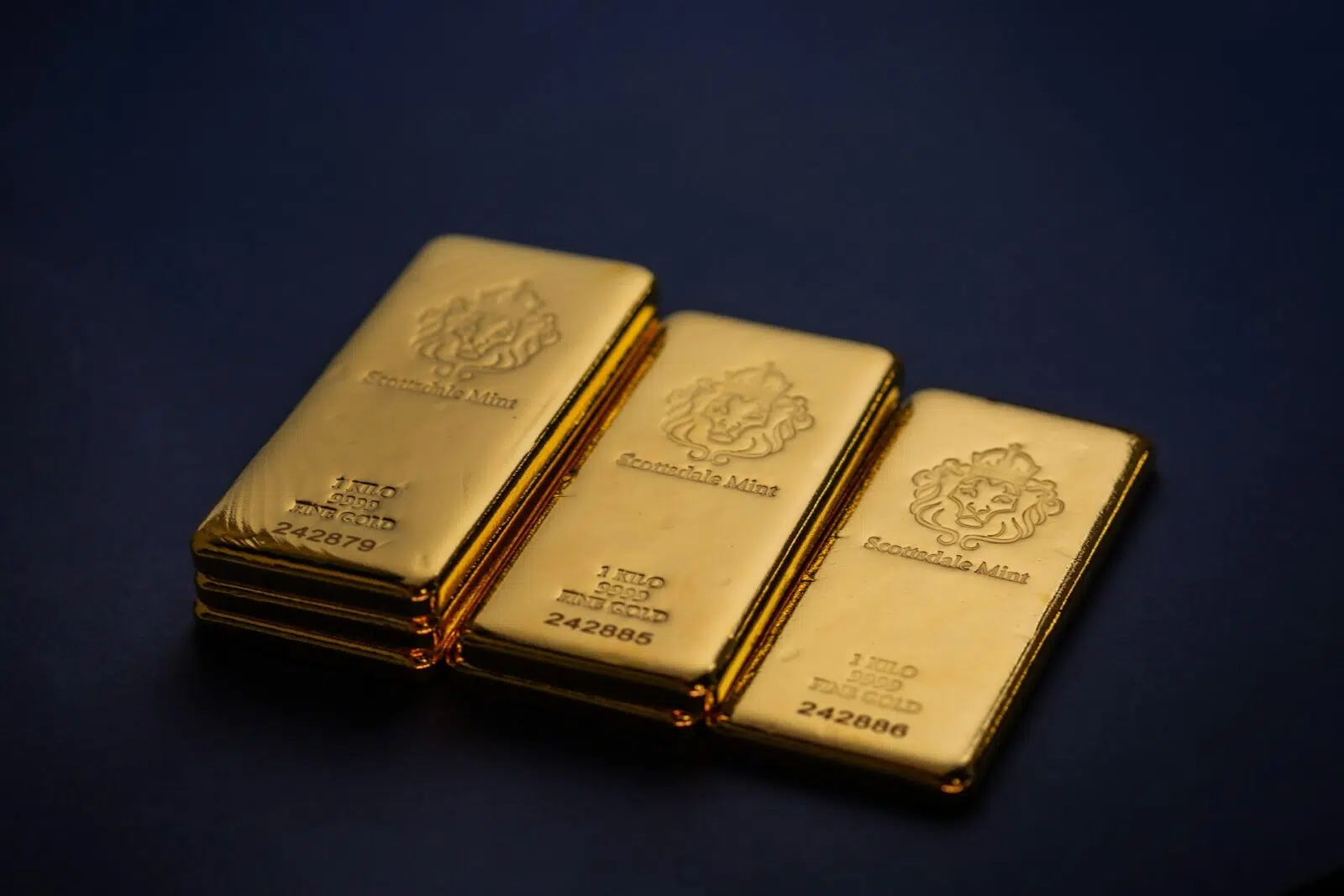
Gold prices are closing the week on firm footing as investors turn their attention to crucial U.S. economic data that could shape the Federal Reserve’s next policy move. With interest-rate expectations, geopolitical tensions, and central-bank demand all converging, the gold price outlook remains a focal point for traders navigating an increasingly complex macro environment.
Gold Prices Supported by Rate-Cut Expectations
Gold has been trading near $4,475 an ounce, posting a weekly gain of roughly 3%, as markets position ahead of the latest U.S. labor market figures. Traders are closely watching December’s nonfarm payrolls report, due Friday, for fresh clues on whether the Federal Reserve may resume interest-rate cuts after delivering three reductions in 2025.
Lower interest rates typically benefit non-yielding assets like gold, as they reduce the opportunity cost of holding bullion. That dynamic played a major role in gold’s historic performance last year, when prices surged more than 65%, marking the metal’s strongest annual return since 1979.
Dollar Strength and Jobs Data Create Short-Term Headwinds
Despite the positive weekly trend, gold has faced mild pressure from a firmer U.S. dollar and stronger-than-expected initial jobless claims. The Bloomberg Dollar Spot Index has climbed about 0.5% this week, making gold more expensive for overseas buyers and tempering upside momentum.
Economists expect the upcoming jobs report to show steady employment growth with stable unemployment levels. Such mixed signals may not immediately force the Fed’s hand, potentially delaying further rate cuts and limiting near-term gold price acceleration.
Geopolitical Risks Reinforce Safe-Haven Demand
Beyond monetary policy, rising geopolitical uncertainty continues to underpin gold’s appeal. Tensions surrounding U.S.–China–Japan trade relations and the recent U.S. action involving Venezuela’s leadership have added a fresh layer of risk to global markets.
Analysts note that political instability tied to major commodity-producing nations often boosts demand for safe-haven assets. The situation in Venezuela, in particular, has introduced both short- and long-term uncertainty for energy and commodity markets, indirectly supporting gold prices.
Central Bank Buying and ETF Inflows Remain Key Drivers
One of the most powerful structural supports for gold has been sustained central-bank buying. Monetary authorities worldwide have continued diversifying reserves away from fiat currencies, reinforcing gold’s role as a long-term store of value.
At the same time, inflows into gold-backed exchange-traded funds (ETFs) have remained resilient, driven by investor concerns over currency debasement, rising debt levels, and geopolitical instability. These forces helped fuel last year’s rally and remain firmly in place heading into 2026.
Fed Leadership Transition Adds to Market Uncertainty
Markets are also closely monitoring developments at the Federal Reserve, with President Donald Trump expected to name a successor to Chair Jerome Powell, whose term ends in May. Treasury Secretary Scott Bessent has confirmed that several candidates are under consideration, adding another variable to rate expectations.
Any perceived shift in the Fed’s stance on inflation, employment, or monetary independence could have meaningful implications for gold prices, particularly if it alters the trajectory of real yields.
Commodity Rebalancing May Trigger Short-Term Volatility
In the near term, technical factors could introduce some volatility. The strong rallies in gold and silver are prompting commodity index rebalancing, which may force passive funds to trim positions to align with updated weightings. While this could create temporary selling pressure, analysts generally view it as a mechanical adjustment rather than a change in underlying fundamentals.
Other Precious Metals Follow Gold Higher
Silver has also remained on track for a weekly gain, trading near $77 an ounce, despite modest pullbacks earlier in the week. Platinum and palladium prices have moved higher as well, supported by tight supply conditions and improving industrial demand.
Conclusion
As the week draws to a close, gold remains well supported by a combination of rate-cut expectations, geopolitical uncertainty, central-bank demand, and long-term inflation hedging. While near-term price action may hinge on U.S. jobs data and dollar movements, the broader trend suggests that gold’s role as a portfolio stabilizer is far from fading. For investors, the focus now shifts to whether upcoming economic signals reinforce the case for looser monetary policy—or introduce fresh volatility into an already eventful precious metals market.